FBT vs. PLC Splitters: A Technical Comparison for Network Deployment

FBT vs. PLC Splitters: A Technical Comparison for Network Deployment

In the architecture of modern fiber optic networks, particularly Passive Optical Networks (PON) that form the backbone of FTTx deployments, passive components play a role as critical as the active electronics. Among these, the fiber optic splitter is fundamental. It is a device that enables a single strand of optical fiber to serve multiple endpoints, making it the key enabler of the point-to-multipoint (P2MP) topology that makes PONs so cost-effective.

When specifying components for a network, engineers and project managers primarily encounter two competing technologies for optical splitting: the traditional Fused Biconical Taper (FBT) splitter and the more modern Planar Lightwave Circuit (PLC) splitter. While both serve the same basic function, their underlying manufacturing processes, performance characteristics, and ideal use cases differ significantly. Making the right choice has long-term implications for network reliability, scalability, and total cost of ownership.

This article provides a detailed technical comparison of FBT and PLC splitters to help network designers, procurement managers, and field engineers make informed decisions aligned with their specific project requirements.

Understanding Fused Biconical Taper (FBT) Splitters

FBT splitters are fabricated using a relatively straightforward and mature process. It involves taking two or more fibers, stripping their outer coating, and then twisting them together. This assembly is then heated by a flame or other heat source while being stretched and tapered. As the fibers are drawn out, the light-propagating cores come into close proximity, allowing the optical signal to couple from one fiber to the others. The split ratio is actively monitored during the process and is determined by the length and angle of the taper.

Advantages and Strengths

  • Cost-Effective for Low Split Counts: The primary advantage of FBT technology is its lower cost for small configurations, such as 1×2, 1×3, or 1×4 splitters. The manufacturing process is well-established and less capital-intensive than PLC fabrication.
  • Customizable Split Ratios: Because the splitting process is monitored in real-time, FBT splitters can be manufactured with non-standard, asymmetric split ratios (e.g., 10/90, 30/70). This is useful in specific network designs where unbalanced power distribution is required.
  • Low Polarization Dependent Loss (PDL): FBT splitters generally exhibit very low sensitivity to the polarization state of the light, which can be an advantage in certain niche applications.

Technical Limitations

  • Wavelength Dependency: FBT splitters are highly dependent on the wavelength of light. A splitter optimized for 1310 nm will show significantly different performance (higher loss) at 1550 nm. This limits their use in multi-wavelength systems like WDM-PON.
  • Poor Uniformity on Higher Splits: While acceptable for 1×2 splits, uniformity (the equal distribution of power to all output ports) degrades significantly as the split count increases. This makes them unsuitable for larger PON architectures.
  • Limited Scalability: The manufacturing process becomes exponentially more complex and less reliable for split counts above 1×8. Consequently, high-density FBT splitters (like 1×32 or 1×64) are not commercially viable or reliable.
  • Temperature Sensitivity: The fused-and-tapered structure is more sensitive to temperature variations, which can affect the insertion loss and overall stability of the connection.

Understanding Planar Lightwave Circuit (PLC) Splitters

PLC splitters represent a more advanced manufacturing technology, deeply rooted in the semiconductor industry. They are created using photolithography, a process similar to printing computer chips. An optical waveguide circuit is etched onto a small quartz substrate. This chip precisely splits the input signal into multiple outputs. Fiber arrays are then meticulously aligned and attached to the input and output ends of this PLC chip, which is then packaged for deployment.

Key Advantages and Strengths

  • Broad Wavelength Operation: PLC splitters are wavelength-insensitive, performing consistently and reliably across a wide range of wavelengths (typically 1260 nm to 1650 nm). This makes them the default choice for GPON, EPON, and WDM-PON systems that use multiple wavelengths for upstream, downstream, and video overlay services.
  • Excellent Uniformity: The photolithographic process allows for extremely precise and repeatable circuit designs. As a result, PLC splitters offer superior uniformity, ensuring that each output port receives a nearly identical share of the optical power, which is critical for predictable network performance.
  • High Split Counts and Compact Size: PLC technology excels at creating high-density splitters (1×16, 1×32, 1×64, and even higher) in a very compact and robust package. This is essential for central office and high-density cabinet deployments.
  • High Reliability and Thermal Stability: The monolithic, solid-state nature of the PLC chip makes it inherently more reliable and stable over a wider operating temperature range (-40°C to 85°C) compared to FBT splitters.

Head-to-Head Technical Comparison: FBT vs. PLC

The choice between FBT and PLC technology becomes clearer when their key performance parameters are compared side-by-side.

ParameterFBT SplitterPLC Splitter
Manufacturing TechnologyFusing and tapering of optical fibersPhotolithography on a quartz substrate
Operating WavelengthWavelength-dependent (typically ±40nm around a central wavelength)Broadband operation (1260nm – 1650nm)
Split Ratio UniformityVariable, degrades with higher split countsExcellent, highly uniform power distribution
Maximum Split CountEffectively limited to 1×8; unreliable above thisRoutinely available up to 1×64 or 1×128
Physical FootprintCan be bulky for higher split configurationsExtremely compact, even for high split counts
Reliability & Temp. StabilityModerate; more sensitive to temperature and mechanical stressHigh; robust over a wide temperature range (-40°C to 85°C)
Cost ProfileLower cost for low split counts (1×2, 1×4)More cost-effective per port on high split counts

Making the Right Procurement Decision

The decision framework for choosing a splitter should be based on the specific network’s architecture, required performance, and future scalability plans.

Choose FBT Splitters when:

  • The application is for signal tapping or monitoring where a specific, non-uniform split ratio is needed.
  • The network uses a single wavelength and will not be upgraded to support multi-wavelength services.
  • The split count is very low (1×2 or 1×3), and budget is the absolute primary constraint for a non-critical application.

Choose PLC Splitters when:

  • You are building GPON, EPON, or any large-scale FTTH network.
  • The network design calls for split ratios of 1×8 or higher.
  • Uniform power distribution and high reliability are mission-critical for network performance and minimizing service calls.
  • The network must support multiple wavelengths for data, voice, and video services.
  • The components will be deployed in environments with fluctuating or extreme temperatures.

For nearly all modern PON applications, the superior reliability, broadband performance, and scalability of PLC splitters make them the strategic and technically sound investment, ensuring network longevity and future-proofing the infrastructure.

Conclusion: Partnering for Network Integrity

The integrity of a fiber optic network is only as strong as its weakest component. While a seemingly small part of the overall infrastructure, the choice of optical splitter has a significant impact on performance and reliability. While FBT splitters still have a role in niche legacy or laboratory applications, PLC splitter technology has become the undisputed standard for building robust, scalable, and future-proof passive optical networks.

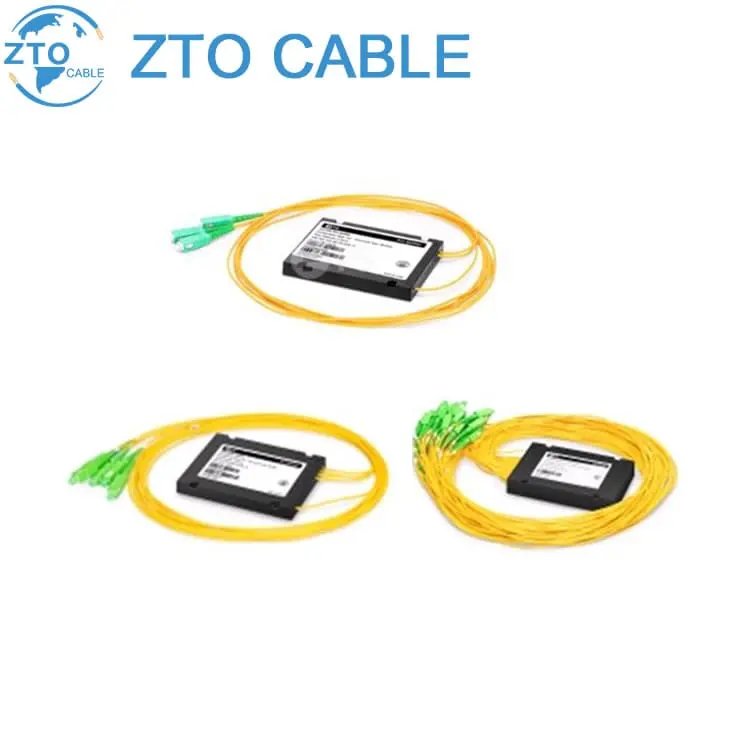
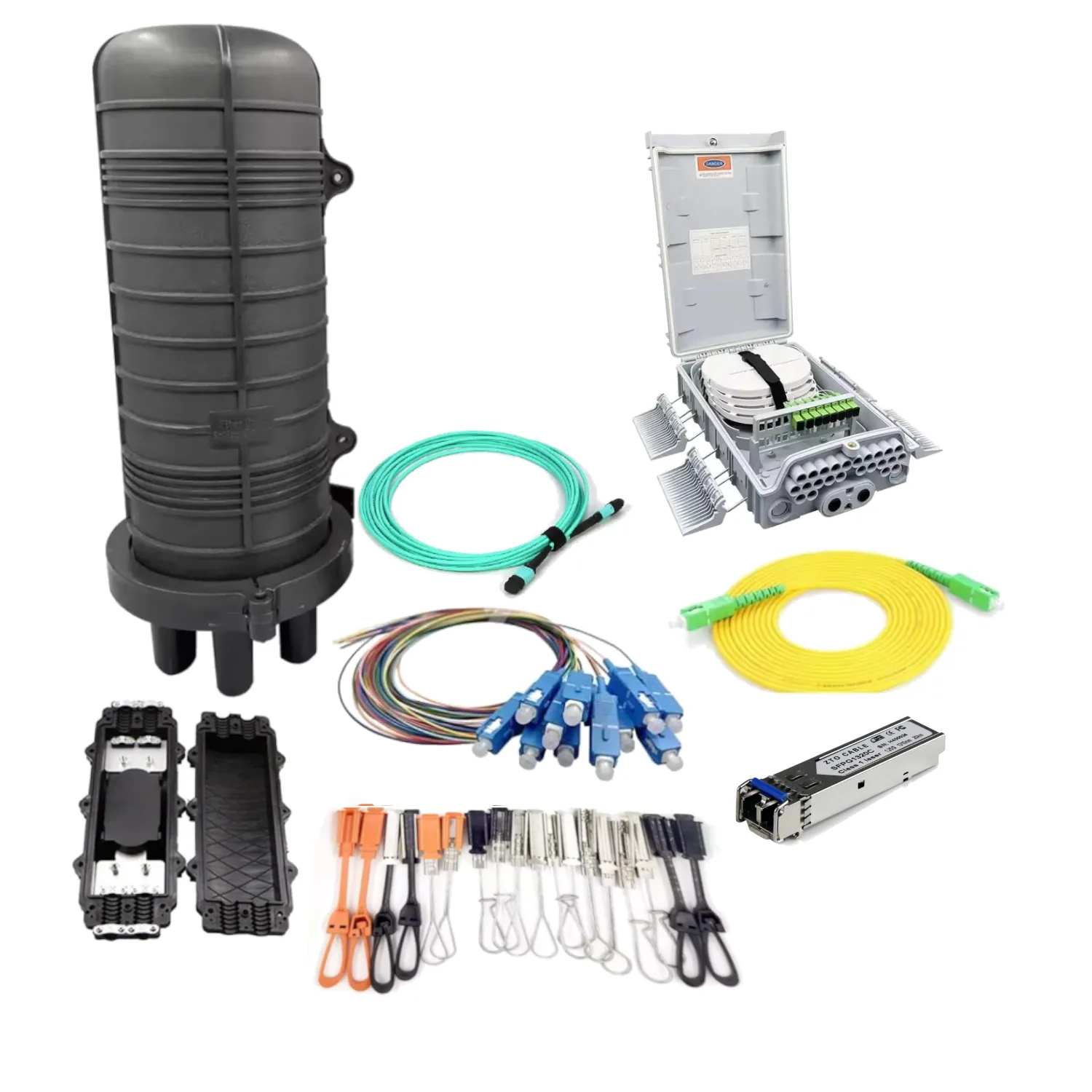
As a manufacturer with a complete industrial chain, ZTO Cable understands the importance of component-level quality. Our FTTH accessories, including our range of high-quality PLC Splitters, are engineered and tested to meet stringent international standards. By ensuring every component, from the optical fiber to the splitter, meets the highest quality benchmarks, we help our clients build networks with superior performance and lower total cost of ownership.

To discuss the specific requirements for your next network project or to get detailed specifications on our portfolio of ODN solutions, please contact our technical team.

Similar Posts