A Technical Comparison of OM1, OM2, OM3, OM4, and OM5 Fibers
In the architecture of modern enterprise networks, data centers, and campus backbones, choosing the right physical infrastructure is paramount. While single-mode fiber is the undisputed champion for long-haul distances, multimode fiber (MMF) remains the dominant, cost-effective solution for short-to-medium reach applications. However, not all multimode fiber is created equal. The “OM” (Optical Multimode) designation, defined by the ISO/IEC 11801 standard, provides a clear grading system for performance. Understanding the differences between OM1, OM2, OM3, OM4, and OM5 is critical for network engineers, procurement managers, and system designers planning for both current bandwidth needs and future scalability.
This article provides a technical deep-dive into each OM category, comparing their capabilities, applications, and the engineering principles that differentiate them.
The Fundamentals: Core Diameter and Light Source
Before comparing the OM standards, it’s essential to understand two foundational concepts: core diameter and light source. Early multimode fibers (OM1) used a 62.5µm core diameter. Most modern MMF (OM2, OM3, OM4, and OM5) utilizes a smaller 50µm core. This smaller core reduces modal dispersion—a phenomenon where different light modes arrive at the receiving end at slightly different times, limiting bandwidth over distance.
Equally important is the light source. Legacy fibers were designed for inexpensive Light Emitting Diode (LED) sources. Modern, high-speed applications require the precision and power of Vertical-Cavity Surface-Emitting Lasers (VCSELs), which operate at specific wavelengths, typically 850nm.
OM1 and OM2: The Legacy Standards
OM1 and OM2 fibers represent the foundational layers of multimode technology. While no longer specified for new high-speed installations, they are still present in many existing building infrastructures.
OM1 Fiber
- Core Diameter: 62.5/125µm
- Light Source: LED
- Jacket Color: Orange
- Performance: Primarily supports 100Mbps Ethernet. It can handle 1 Gigabit Ethernet (GbE), but only over very short distances (around 33 meters), making it impractical for modern backbones. Its large core had strong light-gathering properties but suffered from significant modal dispersion.
OM2 Fiber
- Core Diameter: 50/125µm
- Light Source: LED
- Jacket Color: Orange
- Performance: The move to a 50µm core improved OM2’s performance over OM1, effectively reducing modal dispersion. It reliably supports 1GbE up to approximately 82 meters, which made it suitable for many enterprise LANs of its time. However, like OM1, it is not optimized for laser sources and is insufficient for today’s 10GbE and faster network speeds.
OM3 and OM4: The Era of Laser-Optimized Connectivity
The demand for 10GbE and beyond necessitated a fundamental shift in fiber technology. OM3 and OM4 are “laser-optimized” multimode fibers (LOMMF), specifically engineered to work with 850nm VCSEL sources for dramatically higher bandwidth.
OM3 Fiber
- Core Diameter: 50/125µm
- Light Source: VCSEL
- Jacket Color: Aqua
- Performance: OM3 was the first fiber to be specified for 10GbE transmission up to 300 meters, making it the de facto standard for modern data centers and enterprise backbones for many years. It can also support 40GbE and 100GbE using parallel optics (e.g., MPO/MTP connectors) over shorter distances (up to 100 meters).
OM4 Fiber
- Core Diameter: 50/125µm
- Light Source: VCSEL
- Jacket Color: Aqua or Erika Violet
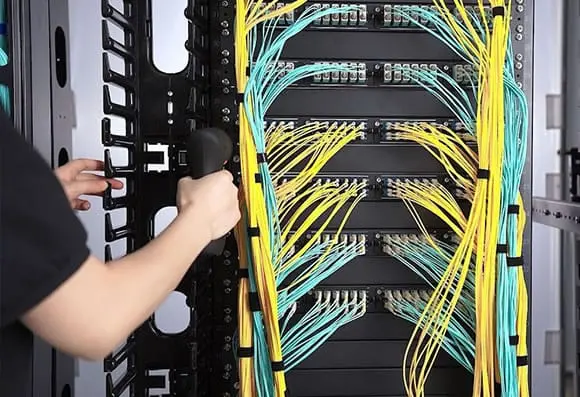
- Performance: As an enhancement of OM3, OM4 offers higher modal bandwidth. This translates to longer reach. It supports 10GbE up to 550 meters and provides more headroom for 40GbE and 100GbE links, supporting them up to 150 meters. For new builds requiring robust performance and future-proofing, OM4 is often the baseline standard. These high-performance cores are the foundation of ZTO’s High-Performance Indoor Fiber Optic Cables, designed for mission-critical data center applications.
OM5: Wideband Multimode Fiber for Next-Generation Data Centers
OM5 represents the cutting edge of MMF technology. While it shares the same core size and is backward-compatible with OM3 and OM4, its key innovation is support for Shortwave Wavelength Division Multiplexing (SWDM).
OM5 Fiber (WBMMF)
- Core Diameter: 50/125µm
- Light Source: VCSEL
- Jacket Color: Lime Green
- Performance: Instead of just operating at 850nm, OM5 is designed to support at least four low-cost wavelengths across a wideband spectrum (850nm to 953nm). This allows for a 4x increase in bandwidth on a single fiber. For example, a 100GbE transmission can be achieved with just two OM5 fibers (one transmitting, one receiving) instead of the eight fibers required by some 100G standards over OM4. This significantly reduces cable density and streamlines infrastructure for 100G, 200G, and 400G applications.
Technical Comparison Summary
The following table provides a clear side-by-side comparison of the key performance metrics for each OM fiber type.
| Parameter | OM1 | OM2 | OM3 | OM4 | OM5 |
|---|---|---|---|---|---|
| Core Diameter | 62.5µm | 50µm | 50µm | 50µm | 50µm |
| Jacket Color | Orange | Orange | Aqua | Aqua/Violet | Lime Green |
| Min. Modal Bandwidth (850nm) | 200 MHz·km | 500 MHz·km | 2000 MHz·km | 4700 MHz·km | 4700 MHz·km |
| 10GbE Max. Distance | 33 m | 82 m | 300 m | 550 m | 550 m |
| Primary Application | Legacy 10/100MbE | Legacy 1GbE | 10/40GbE Data Center | 40/100GbE Data Center | 100/400GbE SWDM |
How to Select the Right Fiber for Your Project
Choosing the correct OM-rated fiber involves balancing performance, distance, and cost. For B2B decision-makers, the choice has long-term implications for network reliability and total cost of ownership (TCO).
- For existing infrastructure upgrades: Carefully identify the currently installed fiber. Mixing 62.5µm OM1 with 50µm fiber requires a mode-conditioning patch cord and is generally not recommended. If upgrading a legacy OM1/OM2 network for higher speeds, a complete re-cabling with OM4 or OM5 is the most reliable path.
- For new enterprise and data center builds: OM4 should be considered the baseline. Its reach and bandwidth provide a robust foundation for 10GbE to 100GbE with a clear TCO advantage over the lifecycle of the network.
- For hyper-scale and forward-looking data centers: OM5 is the strategic choice. Its ability to support SWDM reduces the required fiber count and simplifies cable management for next-generation 200G and 400G architectures.
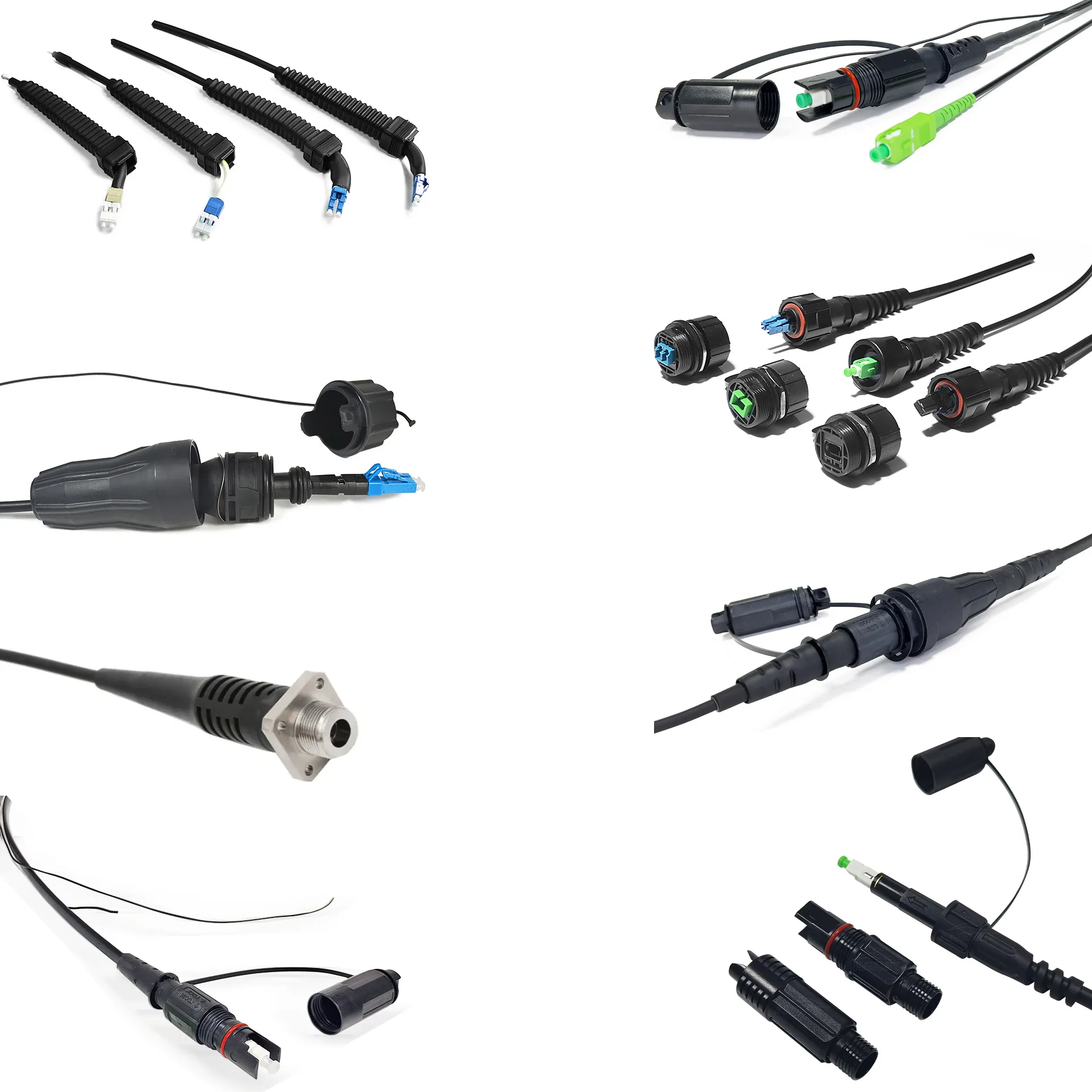
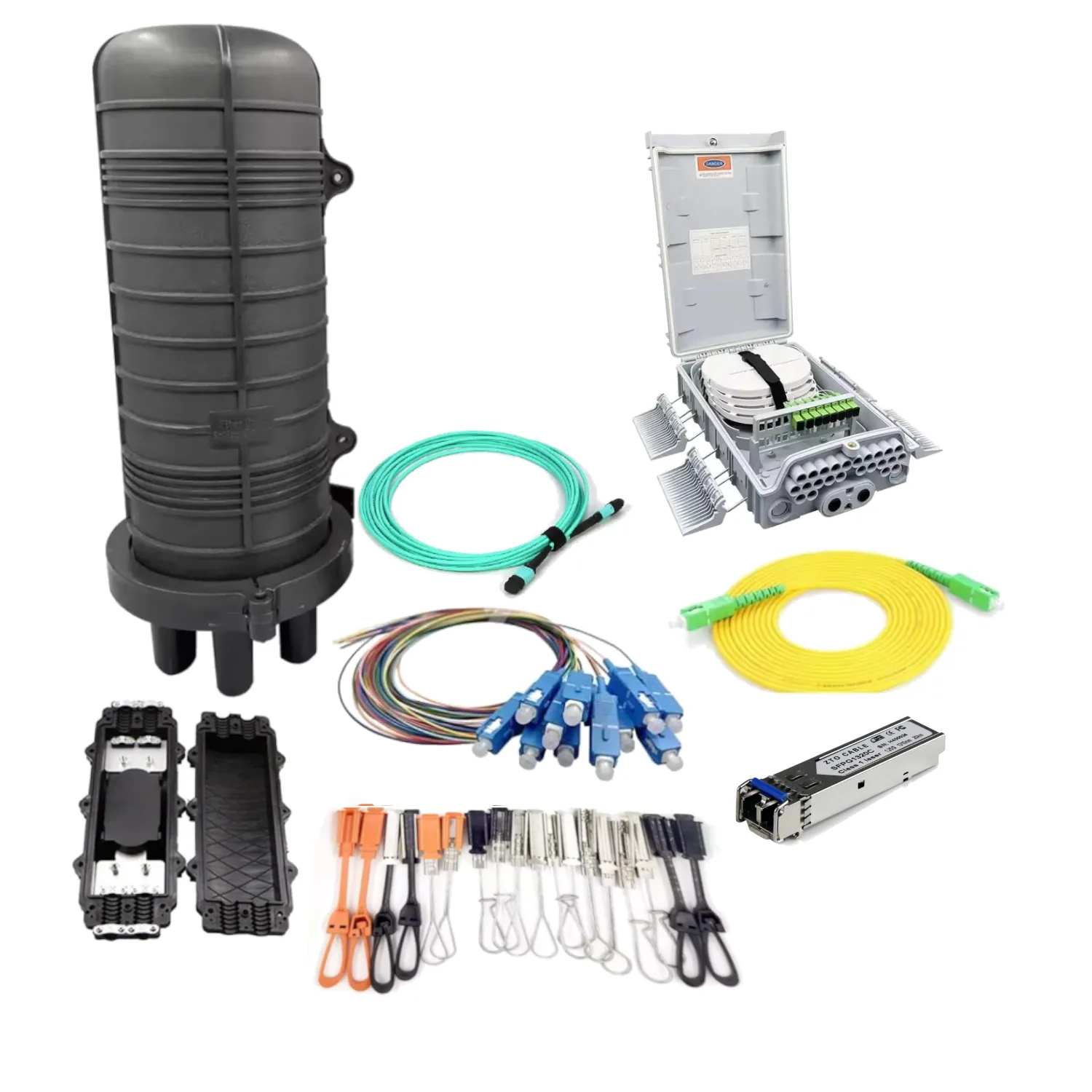
As leading fiber optic cable manufacturers, we incorporate these high-grade fibers into a wide array of cable constructions, from ruggedized outdoor cables to flexible Indoor FO Cable and high-density Pre-terminated Patch Cords for rapid deployment.
Conclusion: Partnering for Performance and Reliability
The evolution from OM1 to OM5 mirrors the relentless demand for more data at faster speeds. Selecting the right multimode fiber is no longer just about meeting today’s needs; it’s about building a scalable, future-proof physical layer for the networks of tomorrow. By understanding the distinct capabilities of each OM standard, organizations can make informed investment decisions that align with their technical and financial goals.
With over 20 years of manufacturing experience and a deep understanding of international standards like IEC 60794, ZTO Cable is equipped to supply the right fiber optic solution for your project. Whether you require standard OM3/OM4 for a data center build or are exploring OM5 for a next-generation deployment, our technical team is ready to assist. Contact us today to discuss your specific requirements and learn how our factory-direct model can benefit your project.