How to Choose ADSS Cable Jacket for High-Voltage Lines: AT (Anti-Tracking) vs PE (Polyethylene) – The Ultimate Comparison

ADSS AT jacket selection is critical:

Key Takeaway: On transmission lines rated 110 kV and above, ADSS cables must use AT (Anti-Tracking) jacket material. For lines below 110 kV where the space potential at the attachment point is ≤12 kV, PE (Polyethylene) jacket is sufficient. Choosing the wrong jacket will cause the cable to fail from dry-band arcing within months — an irreversible failure not covered by standard warranties.


What Is Electrical Tracking in ADSS Cables?

ADSS (All-Dielectric Self-Supporting) fiber optic cables are installed in the strong electric fields surrounding high-voltage transmission lines. Under wet and polluted conditions, an uneven conductive water film forms on the cable surface, generating micro-spark discharges known as dry-band arcing. The high temperature of these arcs progressively erodes the jacket surface, eventually penetrating the outer sheath and exposing the internal aramid yarn. Once the aramid yarn is compromised, the cable loses tensile strength and ultimately breaks — a catastrophic failure that is entirely preventable with correct jacket selection at the specification stage.

AT vs PE Jacket: Core Differences

PE (Polyethylene) Jacket

  • Material: Standard high-density polyethylene (HDPE) or medium-density polyethylene (MDPE)
  • Advantages: Low cost, easy processing, excellent low-temperature toughness
  • Critical weakness: No tracking resistance. In high-voltage environments, electrical tracking failure can occur within months
  • Application scope: Lines below 110 kV where space potential at attachment point ≤12 kV

AT (Anti-Tracking) Jacket

  • Material: Proprietary polyolefin compound incorporating inorganic flame-retardant and anti-tracking fillers
  • Key performance indicator: Passes inclined-plane tracking test per IEC 62217 / ASTM D2303, with tracking resistance ≥4.5 kV
  • Application scope: All transmission lines ≥110 kV; also recommended for sub-110 kV lines where space potential exceeds 12 kV
  • Cost: Approximately 1.3–1.6× that of PE jacket — a marginal premium when weighed against the cost of field failure and emergency replacement

Selection Table: Voltage Level vs Space Potential vs Jacket Material

Line Voltage Level Typical Space Potential at Attachment Point Recommended Jacket Notes
10–35 kV ≤5 kV PE Single jacket is sufficient
35–66 kV 5–12 kV PE or AT (AT preferred) AT strongly recommended in humid/polluted areas
110–220 kV 12–25 kV AT (Mandatory) Double jacket recommended
330–500 kV 25–50 kV AT (Mandatory) + Double Jacket Optimize attachment point with vibration dampers
≥750 kV >50 kV AT (Mandatory) + Double Jacket + Hardware Shielding Requires dedicated E-field simulation

How to Verify Genuine AT Jacket

Some suppliers pass off plain PE as AT jacket material — a dangerous practice that puts your network integrity at risk. Procurement teams should demand the following documentation:

  1. IEC 62217 (or equivalent ASTM D2303) inclined-plane tracking test report — must show the sample withstood ≥4.5 kV without tracking failure
  2. Raw material MSDS and TDS — including inorganic filler content analysis
  3. Third-party type test report — full cable must pass IEC 60794-4-10 ADSS-specific tests

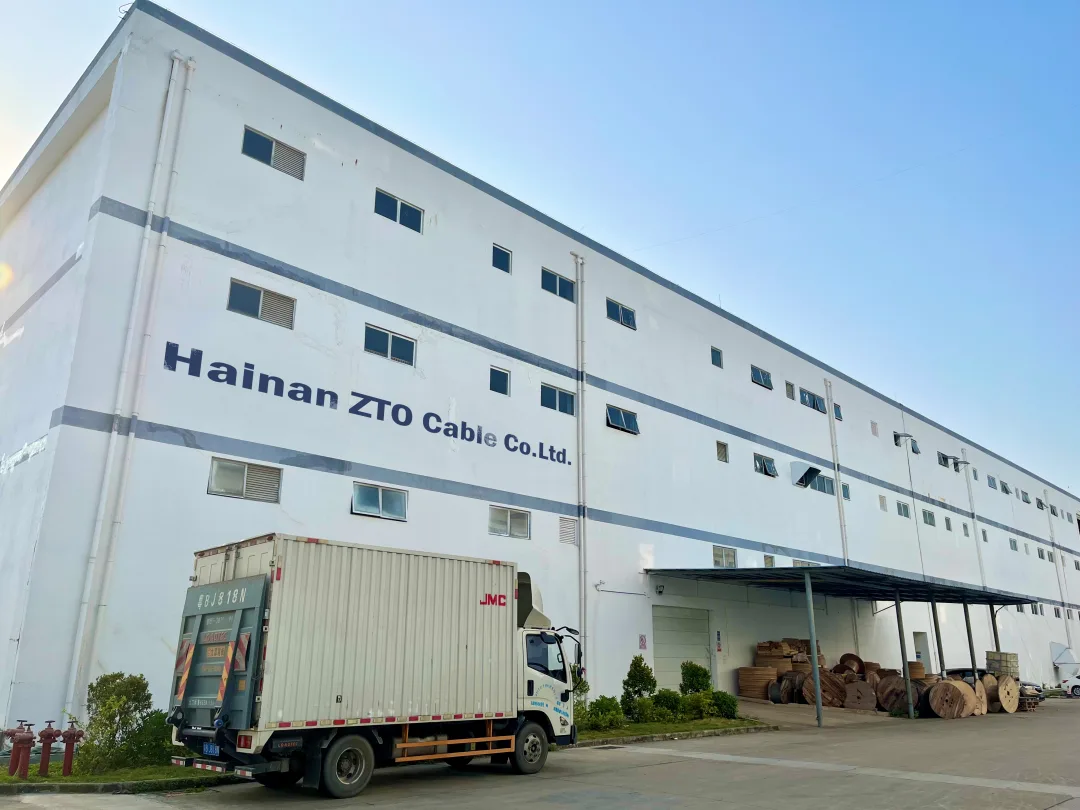
At ZTO Cable, every ADSS cable undergoes 100% factory testing before shipment, including tensile strength, attenuation, and jacket integrity verification. We encourage buyers to request test reports during the inquiry stage — transparency is the first line of defense against substandard materials.

FAQ

Q: Our line is 110 kV, but the ADSS is attached to the lowest telecom cross-arm. Is AT jacket still required?

A: Yes. Even though the space potential is lower at the lowest cross-arm position, the overall E-field intensity on a 110 kV tower remains high. Under polluted, wet conditions, the conductive water film will still trigger dry-band arcing. For operational safety margin, AT jacket is recommended along the entire 110 kV route. For specific attachment point optimization, our engineering team can provide space potential simulation support.

Q: Does AT jacket have a shorter service life than PE?

A: The opposite is true. In the correct E-field environment, AT jacket is rated for ≥25 years of service — significantly outlasting PE, which may fail within months under high voltage. When properly specified, AT jacket offers equivalent or longer service life compared to PE in its appropriate use case.

Q: What should we do if an already-installed PE-jacketed ADSS cable shows tracking damage?

A: Electrical tracking is irreversible. The only solution is replacement with an AT-jacketed cable. During replacement, reassess the attachment point position and commission a space potential simulation to identify the optimal location. For compatible suspension clamps and tension hardware required for the new installation, ZTO Cable offers a complete one-stop package to minimize site rework.

Q: Is the cost premium of AT jacket justified?

A: Absolutely. The 30–60% material premium represents a tiny fraction of the total project cost when factoring in: emergency outage costs, tower access and labor for unplanned replacement, and reputational risk. A failed PE-jacketed cable on a 220 kV line can cost 10–20× the initial jacket price difference to remediate. Choose AT jacket up front — it is the single most cost-effective decision in high-voltage ADSS deployment.

Similar Posts