
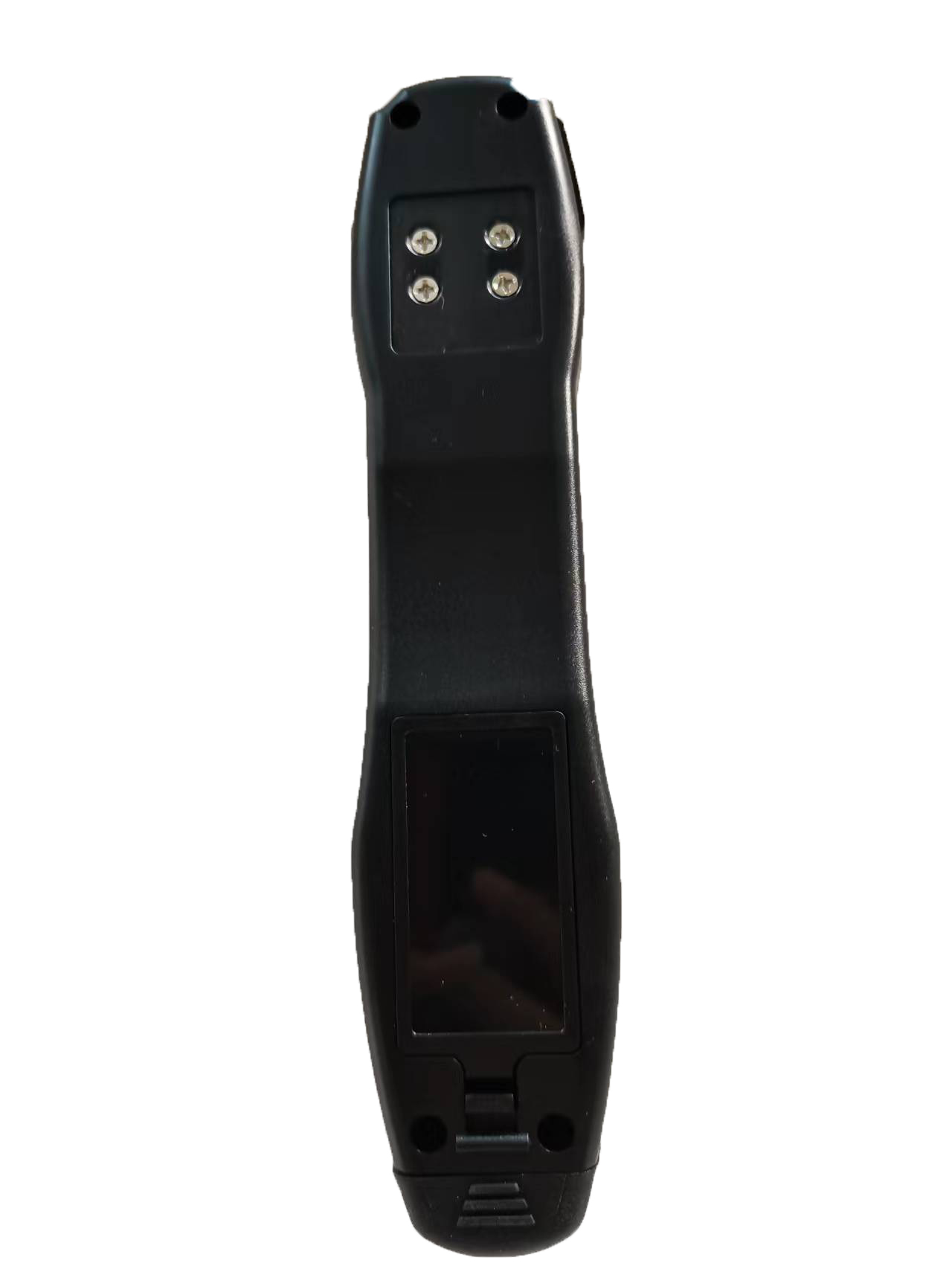
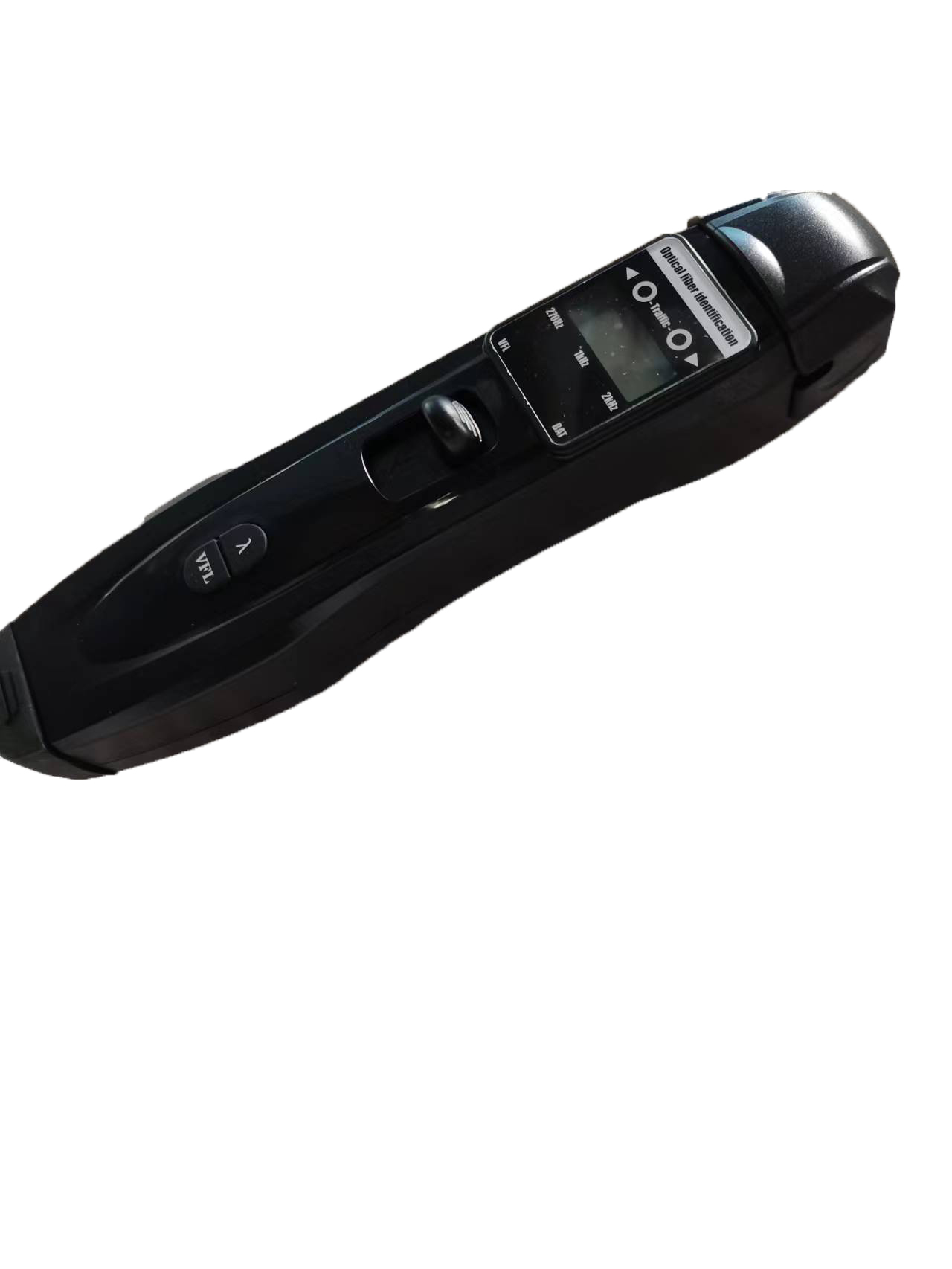
Fiber Optic Identifier with Macro-Bend Technology
- Satisfaction guarantee
- Fast delivery
- Quality assurance
Description
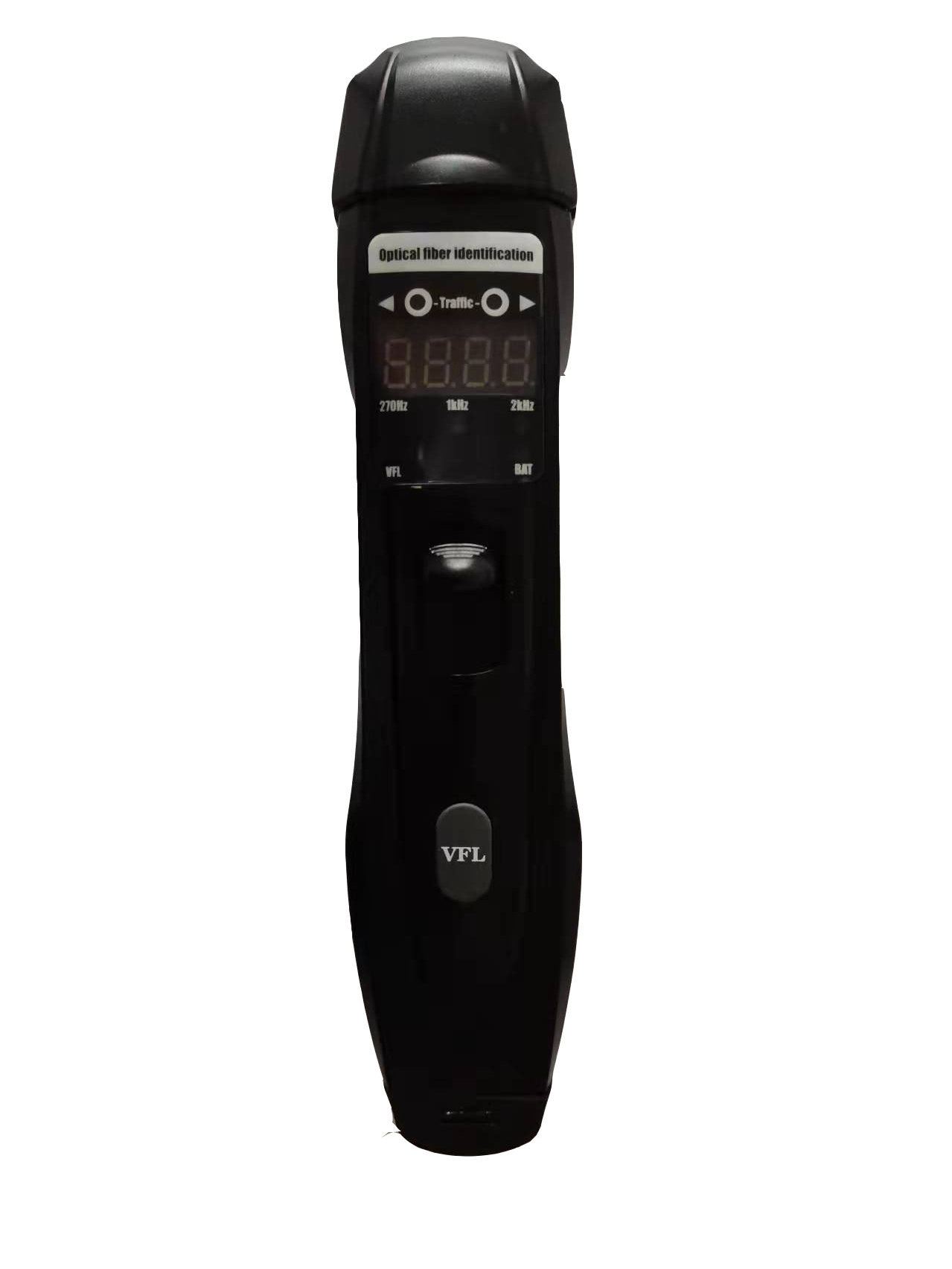
The Fiber Optic Identifier utilizes macro-bend technology for non-destructive testing of optical lines, capable of detecting signal direction and approximate power at any location on both single-mode and multi-mode fibers. It prevents service interruption caused by misoperation during maintenance and installation work.
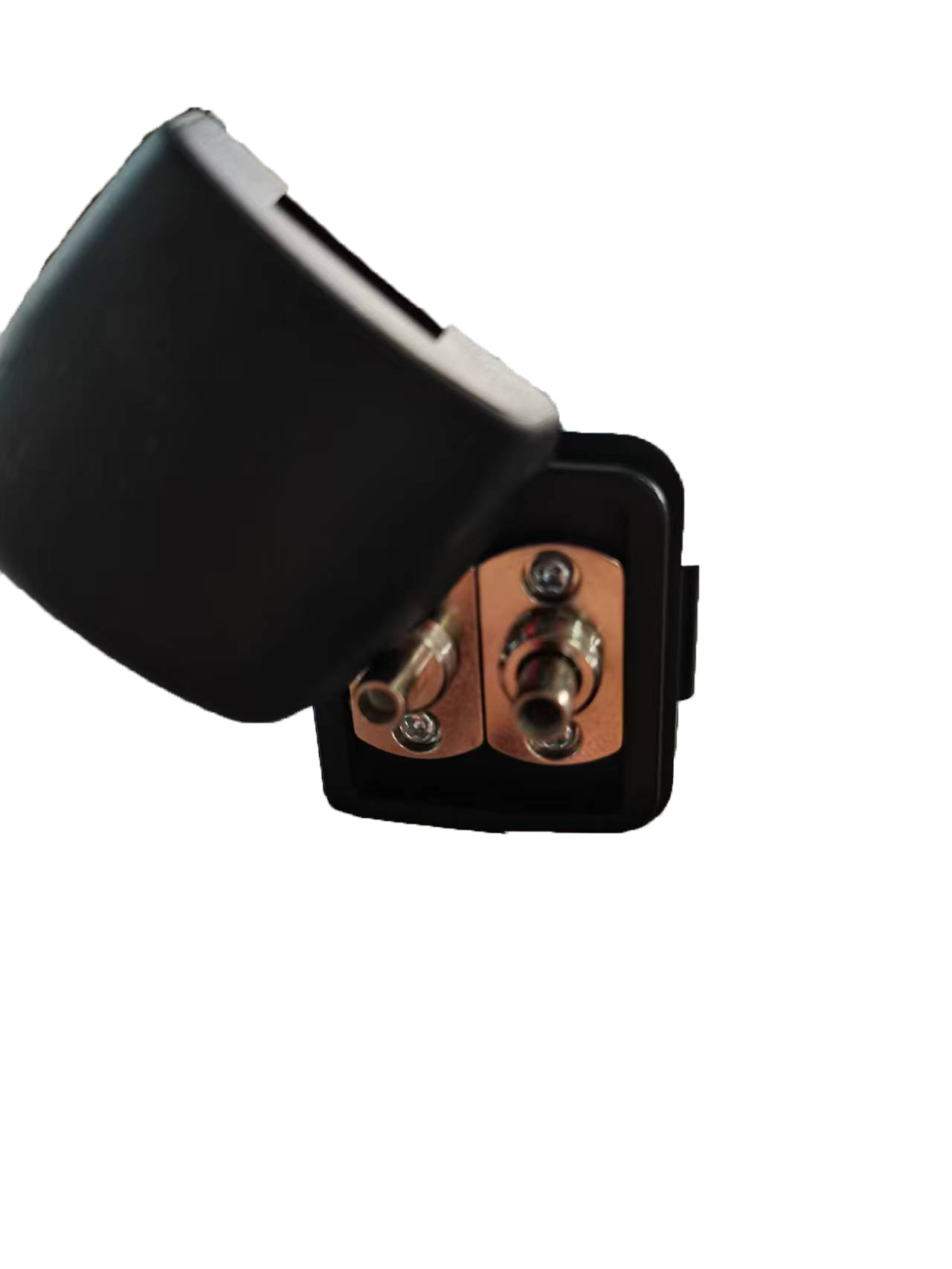
Macro-bend measurement: By detecting the weak light signal leaked when the fiber is bent, it identifies the direction and intensity of the optical signal through analysis of leakage direction and strength. This method causes no damage to the fiber and does not interrupt communication, allowing direct testing of 0.25mm bare fiber, 0.9mm tight-buffered fiber, and 3mm patch cords.
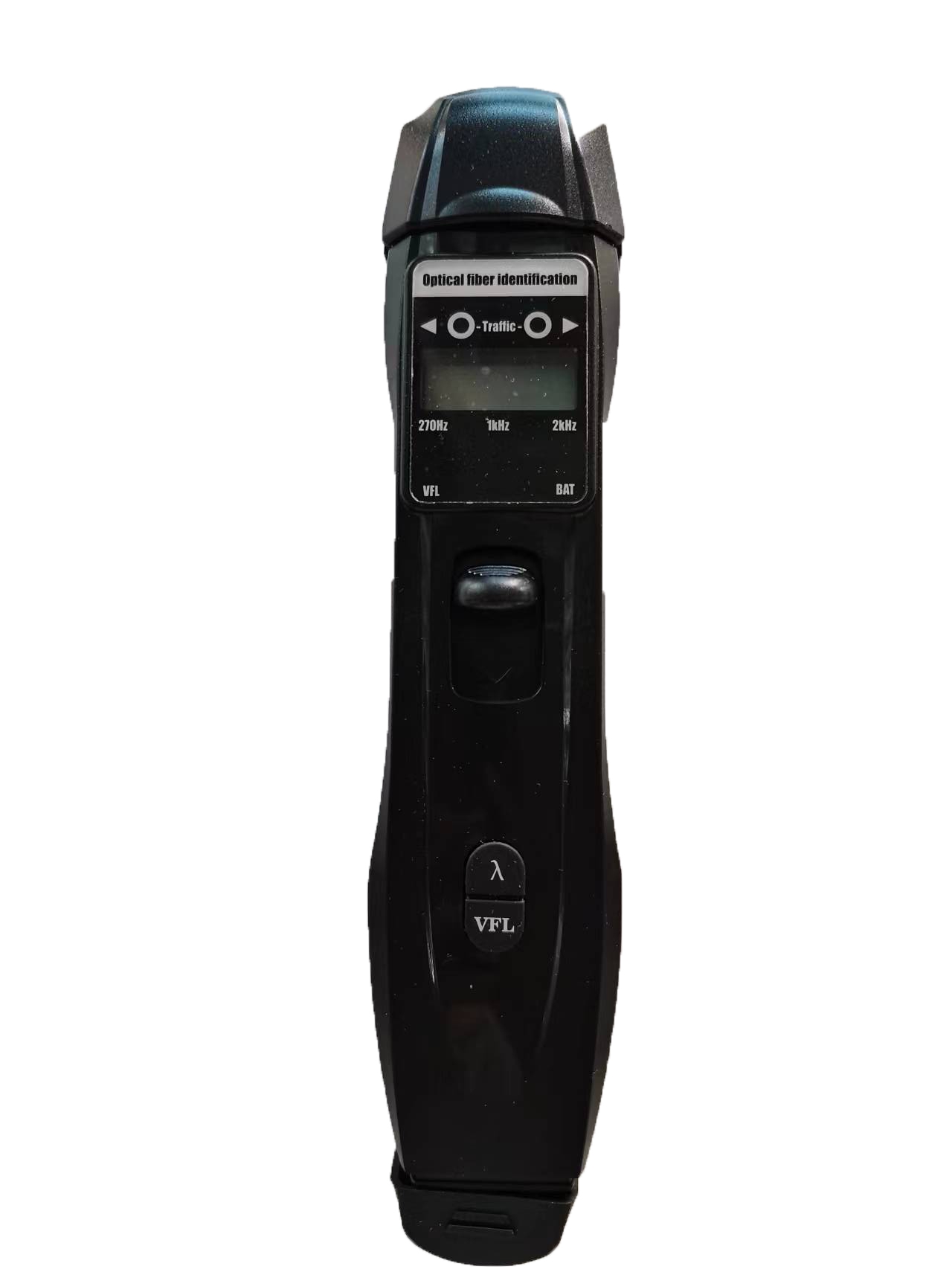
Red light function: An optional 10mW red light source is available for locating fault points on lines up to 10km (laboratory value). Power meter function: An optional power meter with 10 standard wavelengths can be configured for testing the optical power density of measured fibers.
Low battery monitoring: When battery power is low, the device provides yellow or red visual alerts to prompt users to replace batteries, preventing unexpected interruption during use.
Product Features
- Safely and effectively identifies light direction and frequency without cutting or interrupting the fiber
- Features “one-button” operation for simplicity and user convenience
- Provides corresponding adapters for various fiber types including bare fiber, pigtails, and patch cords
- Identifies three common signal frequencies: 2kHz, 1kHz, and 270Hz with audible beep indication
- Displays approximate optical power value of the measured fiber
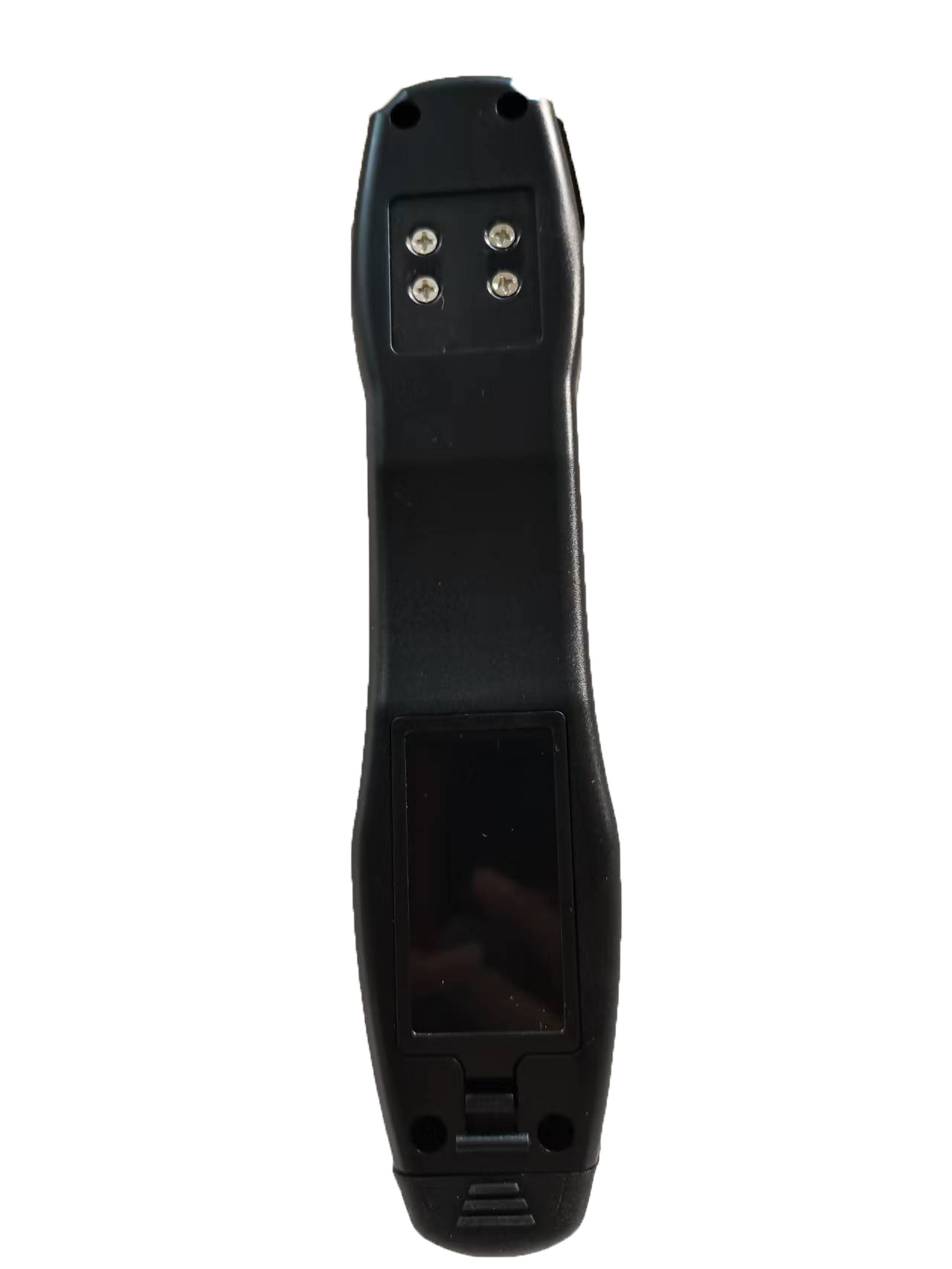
- Uses standard 9V dry batteries for low power consumption, compact size, and portability
- Clear and intuitive LED indicators for easy status monitoring
Technical Specifications
Fiber Optic Identifier Specifications
| Identification Wavelength Range | 800~1700 nm |
| Probe Type | InGaAs |
| Adapter Types | Diameter 0.25mm (for bare fiber); Φ0.9mm, Φ2.0mm, Φ3.0mm (for pigtails) |
| Modulation Frequencies | CW, 270Hz, 1kHz, 2kHz |
| Signal Direction Indication | Left/right LED direction indicators |
| Signal Direction Detection Range | -48~+10 dBm |
| Signal Power Detection Range | -50~+10 dBm |
| Signal Frequency Indication | 270Hz, 1kHz, 2kHz |
| Frequency Detection Range (Average) | Φ0.9, Φ2.0, Φ3.0: -25~+10 dBm Φ0.25: -10~+10 dBm |
| Insertion Loss (Typical) | 0.8 dB (1310 nm) 2.5 dB (1550 nm) |
Visual Fault Locator
| Operating Wavelength | 650 nm ±10 nm |
| Output Power | ≥2 mW |
| Optical Connector | Universal connector |
| Output Mode | CW / 1Hz / 2Hz |
Optical Power Meter
| Wavelength Range | 800 nm – 1700 nm |
| Optical Connector | Universal connector |
| Detector Type | InGaAs |
| Power Measurement Range | -70 dBm ~ +26 dBm (optional) -50 dBm ~ +26 dBm (standard) |
| Uncertainty | ±5% |
| Calibration Wavelengths | 850 nm / 980 nm / 1300 nm / 1310 nm / 1490 nm / 1550 nm / 1625 nm / 1650 nm |
| Display Resolution | Logarithmic display: 0.01 dBm |
| Identifiable Frequencies | CW, 270Hz, 1kHz, 2kHz |
General Specifications
| Battery | 9V alkaline |
| Battery Continuous Operation Time | 10 hours |
| Operating Temperature | -10℃ ~ +50℃ |
| Storage Temperature | -40℃ ~ +70℃ |
| Dimensions | 220 mm × 48 mm × 40 mm |
| Weight | 200 g |


