How ADSS Cables Withstand Extreme Weather: Custom Solutions for Heavy Ice and Typhoon Zones

ADSS extreme weather engineering begins with understanding the physics:

Key Takeaway: ADSS fiber optic cables deployed in heavy ice zones and typhoon-prone regions require engineered upgrades beyond standard designs: increased aramid yarn content, thicker or double-layer jackets, and specialized hardware selection. Ice accretion can multiply cable weight by a factor of 5 to 20, while sustained winds in typhoon corridors routinely exceed 45 m/s (162 km/h). Without custom engineering, the combined ice-wind loading will exceed the cable’s MAT, causing either tensile failure or permanent elongation that degrades fiber attenuation. This article outlines the design adaptations, testing protocols, and hardware pairing that ensure ADSS survival in the world’s harshest overhead line environments.


The Physics of Ice Loading on ADSS Cables

Ice accretion — whether glaze ice, rime ice, or wet snow — increases cable weight dramatically. A standard ADSS cable weighing 0.3 kg/m can accumulate an ice sleeve weighing 2.0 to 5.0 kg/m under moderate to heavy icing conditions (10–25 mm radial ice thickness). This transforms a typical 200 m span from a 60 kg self-weight load into a 400–1000 kg iced load, easily exceeding the MAT of an unmodified standard design.

The three primary ice-related failure modes are:

  1. Tensile overload: Ice weight plus concurrent wind pushes total tension beyond cable breaking strength.
  2. Galloping: Asymmetric ice accretion creates an aerodynamic profile that oscillates at low frequency (0.1–1 Hz) with amplitudes up to 5 m, causing fatigue at suspension and dead-end clamps.
  3. Ice shedding impact: Sudden ice release on one span creates dynamic snap loads that propagate to adjacent spans and tower attachments.

Design Adaptations for Heavy Ice Zones (≥15 mm Radial Ice)

For 15–25 mm design ice thickness (IEC 60826 Zone Class B/C, or equivalent local codes), the following design modifications are applied to large-span ADSS cables:

Design Parameter Standard Design Ice-Zone Upgrade Benefit
Aramid yarn content 5–18% (depending on span) +30 to +60% increase Higher MAT margin for iced static load
Outer jacket thickness 1.2–1.5 mm (PE) / 1.5–1.8 mm (AT) 1.8–2.5 mm Improved abrasion resistance during ice shedding
Jacket configuration Single jacket Double jacket Inner jacket protects core if outer is damaged by ice impact
Fiber strain window 0.15–0.20% 0.20–0.25% Accommodates higher MAT without excess fiber strain
Water blocking Dry (swellable tape) Dry + gel-filled loose tubes Prevents internal ice crystal formation in micro-cracks

Typhoon and High-Wind Zone Engineering

In regions exposed to tropical cyclones (Category 3+ on the Saffir-Simpson scale, sustained winds >50 m/s), ADSS design must address:

Wind pressure calculation: Per IEC 60826, wind pressure P = 0.5 × ρ × V² × G × C_d × D, where ρ is air density (1.225 kg/m³), V is design wind speed (m/s), G is gust response factor, C_d is drag coefficient (typically 1.0–1.2 for cylindrical cables), and D is cable diameter (m). For a 16 mm diameter cable at 55 m/s wind, the resultant pressure can exceed 30 N/m — comparable to the cable’s own weight.

Key wind-zone adaptations:

  • Reduced span lengths: Where possible, insert intermediate poles to reduce any single span below 300 m in exposed corridors
  • Spiral vibration dampers on every span: Wind speeds above 8 m/s trigger Aeolian vibration; above 25 m/s, wake-induced oscillation is possible on bundled configurations
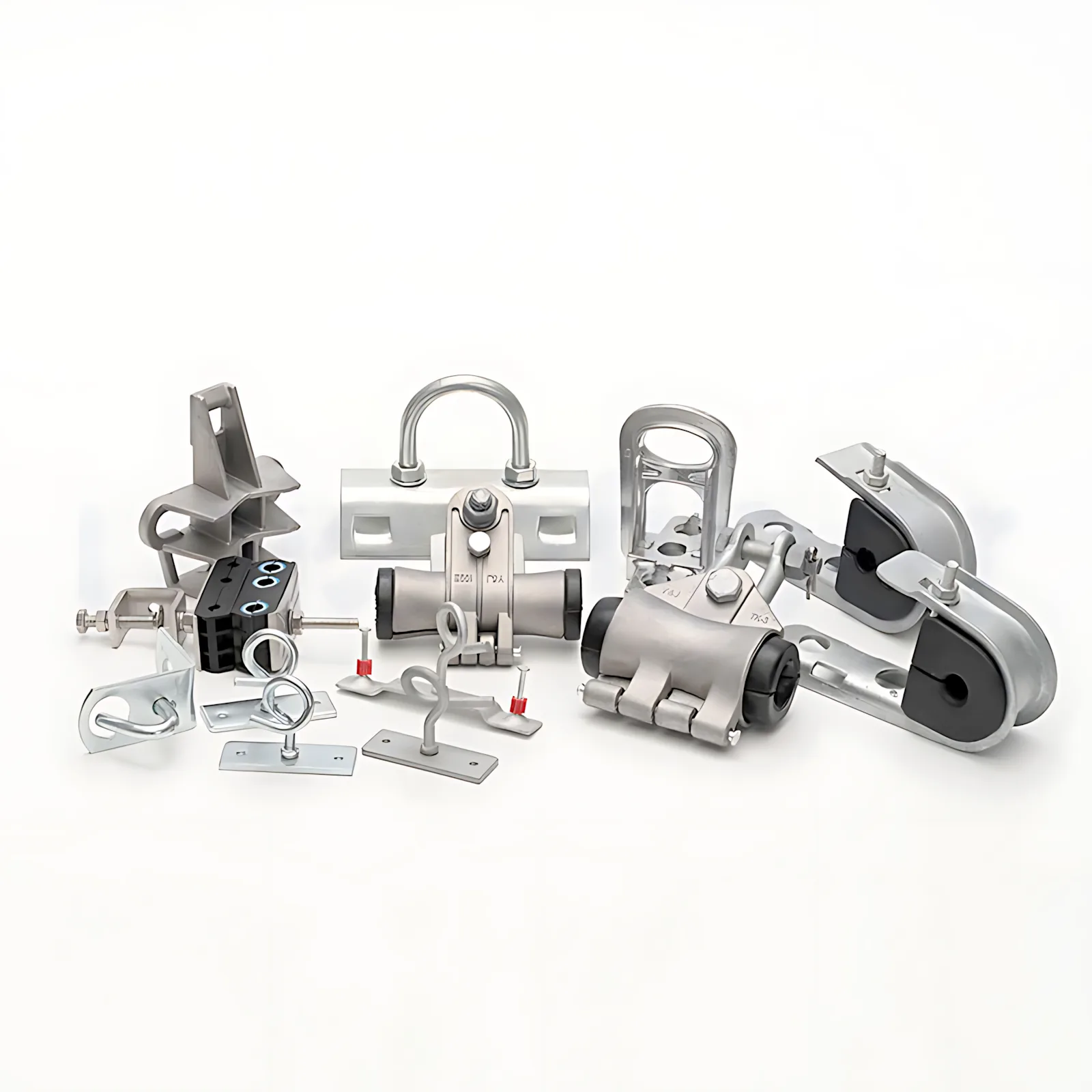
  • Increased clamp grip length: Dead-end and suspension clamps with extended preformed rod length distribute the concentrated dynamic load over a larger cable surface area, preventing localized jacket damage

Real-World Performance: Double Jacket in Arctic and Coastal Deployments

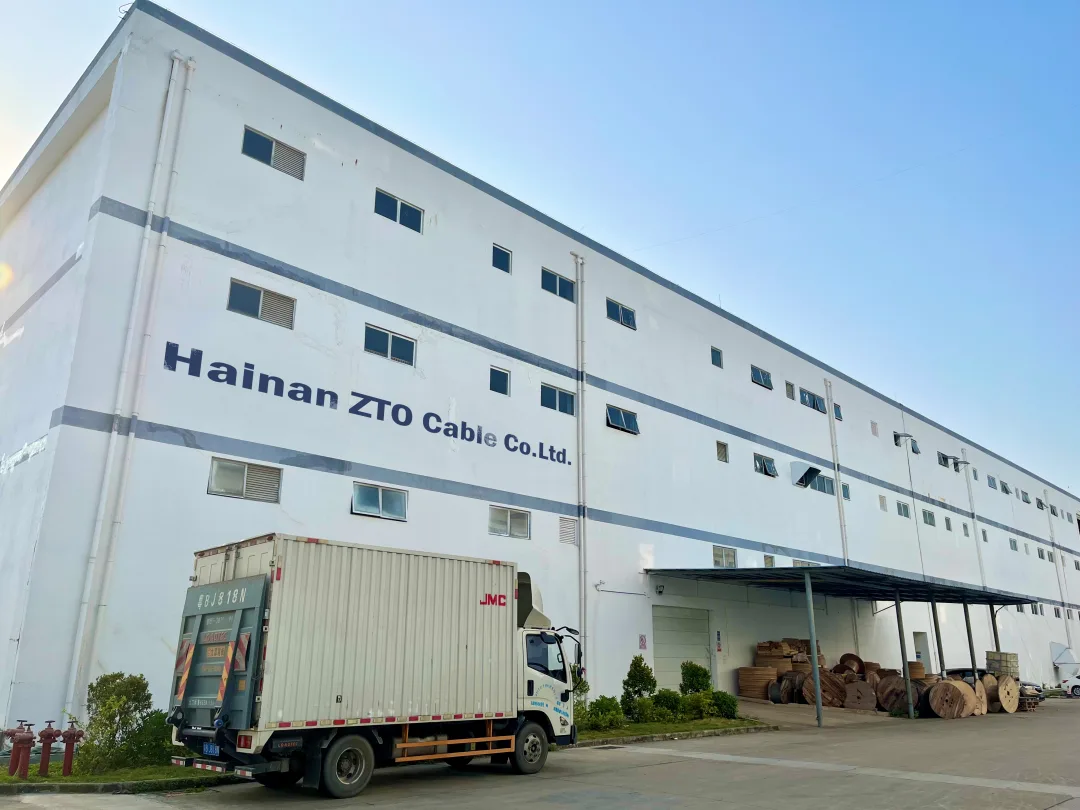
ZTO Cable’s Double Jacket ADSS cable has been deployed in environments ranging from Siberian winter corridors (-50°C, 20 mm radial ice) to Southeast Asian coastal typhoon zones (65 m/s design wind). The double jacket architecture — an inner PE or AT jacket bonded to the cable core, and an outer UV-stabilized sheath — provides two independent barriers against environmental degradation. In laboratory testing, this configuration withstands 200+ cycles of thermal shock (-40°C to +70°C, 4-hour dwell) without jacket cracking or delamination.

Every cable undergoes 100% factory testing including: tensile test to 60% RTS held for 1 hour, crush resistance, impact resistance at -20°C, and water penetration test per IEC 60794-1-2 method F5.

FAQ

Q: How does ice loading affect ADSS cable attenuation?

A: Ice loading itself does not directly increase attenuation — the risk is mechanical. If the iced cable tension exceeds the fiber strain window (typically 0.15–0.25%), the optical fiber experiences micro-bending and macro-bending, causing attenuation increases of 0.05–0.5 dB/km. Recovery depends on whether the strain was elastic (temporary) or plastic (permanent). A properly designed ice-zone cable maintains fiber strain below the proof-test level (typically 0.69 GPa / 1% strain for 1 second) under worst-case iced load.

Q: Can standard ADSS be retrofitted for ice/wind zones after installation?

A: The cable itself cannot be modified post-installation. However, you can reduce risk by: (a) installing additional spiral vibration dampers, (b) adding intermediate support poles to reduce effective span length, or (c) applying hydrophobic anti-icing coatings to reduce ice adhesion. For new installations, always specify the environmental zone at the quotation stage.

Q: What hardware should be paired with ice-zone ADSS?

A: Use preformed rod tensile clamp sets with extended rod length (minimum 2× cable diameter grip length), suspension clamps with armor rods at every support point, and spiral dampers positioned to cover the full Aeolian vibration frequency range (5–50 Hz). A complete one-stop ADSS/OPGW hardware package ensures all components are load-matched to the specific cable design.

Similar Posts