Low-Cost Rural FTTx Deployment: Using Existing Power Poles with ADSS Fiber Optic Cable

ADSS rural FTTx deployment transforms the economics of last-mile fiber:

Key Takeaway: The single largest cost driver in rural fiber-to-the-home (FTTH) and fiber-to-the-village (FTTV) deployments is civil works — trenching, ducting, and erecting new poles. By utilizing ADSS (All-Dielectric Self-Supporting) fiber optic cable on existing medium-voltage and low-voltage power distribution poles, operators can achieve 40–60% capital expenditure reduction compared to buried fiber or new-build aerial routes. The dielectic (non-metallic) construction of ADSS eliminates the need for bonding and grounding, simplifies installation permits, and allows deployment without service interruption. For spans of 50–200 meters — the dominant pole spacing in rural distribution networks — the Single Jacket ADSS cable with PE jacket offers the optimal balance of cost, mechanical performance, and ease of deployment.


Why Rural Broadband Economics Favor ADSS on Power Poles

Rural broadband deployments face a brutal economic equation: low subscriber density (5–50 households per route-kilometer) versus high infrastructure cost. The three standard construction methods and their typical per-kilometer costs (developing-market benchmarks):

Construction Method Cost per km (USD, approx.) Timeline Key Limitation
Trenched/buried duct fiber $8,000–$20,000 3–6 months Wayleave, rocky terrain, flooding
New-build aerial (new poles) $12,000–$25,000 4–8 months Pole cost ($150–400 each), land access
ADSS on existing power poles $2,500–$6,000 1–3 months Requires utility cooperation agreement

The cost advantage of the ADSS power-pole approach stems from three factors: zero trenching cost, zero new pole cost, and dramatically reduced labor (a two-person crew can install 2–4 km per day of lightweight ADSS cable using a pay-out reel and tensioner).

Product Selection: Matching ADSS to Rural Spans

Rural distribution networks typically feature pole spacings of 50–200 meters. For these spans, ZTO Cable recommends:

Single Jacket ADSS Span 50M–200M

  • Construction: Central loose tube with up to 48 fibers (G.652D or G.657A2 bend-insensitive), water-blocking swellable tape, aramid yarn strength member, PE outer jacket
  • MAT: 4–8 kN — ample margin for spans up to 200 m with 1.5% sag
  • Weight: 45–70 kg/km — enabling manual handling without cranes or winches
  • Jacket: UV-stabilized HDPE, suitable for tropical sun exposure (1000+ hours QUV testing per ASTM G154)
  • Delivery: Standard wooden drums from 2 km to 8 km, deployed via trailer-mounted pay-out

For spurs and drop segments (the final 100–500 meters from distribution pole to subscriber), the Round DROP Mini ADSS (GJFJU) provides an ultralight self-supporting option with 1–4 fibers, flat or round profile, and an integrated messenger.

Installation Workflow: 5 Steps from Route Survey to Lighting the Fiber

  1. Route survey and pole audit: Walk the line; document every pole condition, span length, attachment height, and vegetation encroachment. Confirm that poles are structurally sound for the additional conductor.
  2. Utility agreement: Secure a Joint Use Agreement or equivalent with the power utility. The agreement should specify: attachment zone (typically 0.5–1.5 m below the lowest phase conductor for medium-voltage lines), clearance requirements, and maintenance access protocols.
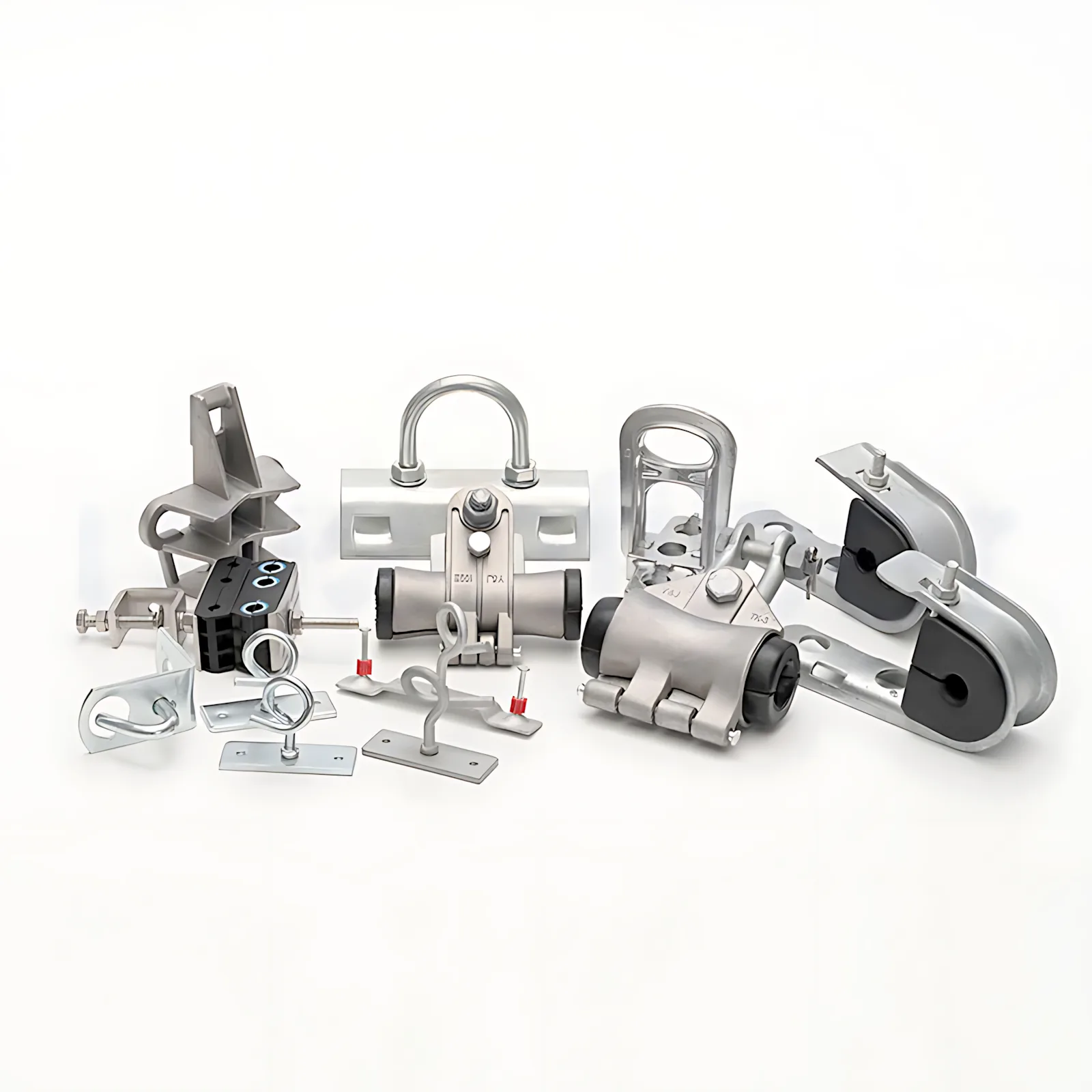
  3. Hardware installation: Mount suspension clamps at tangent poles and tensile dead-end clamps at angle/corner/terminal poles. Install down-lead clamps at splice and drop locations.
  4. Cable stringing: Use the drive-off method (truck-mounted reel) or stationary pay-out with tensioner. Maintain back-tension sufficient to keep sag within design limits; do not drag cable on the ground — use roller blocks at each pole.
  5. Splicing, testing, and commissioning: Fusion-splice at designated closure points. Perform end-to-end OTDR and IL/ORL testing per ITU-T G.652 standards before handover.

ROI Comparison: New Poles vs. ADSS on Power Poles

Consider a 50 km rural route serving 1,200 households at 24 HH/km density:

Cost Element New Pole Aerial ADSS on Power Poles Saving
Poles (every 50 m) 1,000 poles × $200 = $200,000 $0 (existing) $200,000
Cable (50 km) Figure-8 at $350/km = $17,500 ADSS at $280/km = $14,000 $3,500
Hardware (clamps, dampers) $25,000 $18,000 (package) $7,000
Labor & equipment $150,000 $80,000 $70,000
Total $392,500 $112,000 $280,500 (71%)

Note: Actual savings vary by region, labor rates, and pole condition. A detailed site survey is essential for accurate budgeting.

FAQ

Q: Do I need the power utility to de-energize the line during ADSS installation?

A: No — this is a core advantage of ADSS. The all-dielectric construction (no metal) means the cable can be installed on energized lines, provided crews maintain safe approach distances per local electrical safety regulations (typically 1–3 m for distribution voltages). This avoids costly outage coordination with the utility. See our ADSS product page for live-line installation guidelines.

Q: What happens if a pole falls or is replaced?

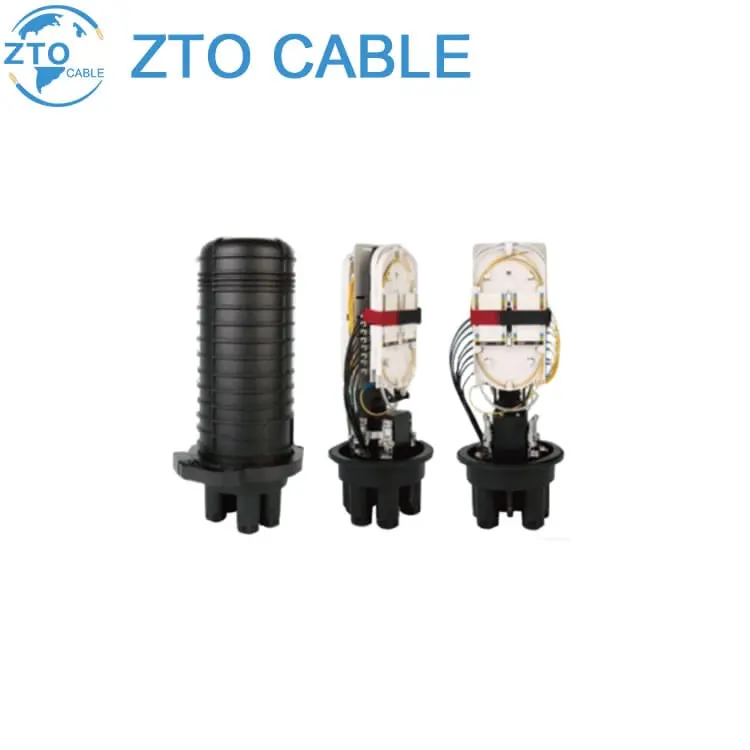
A: The ADSS cable can be temporarily supported while pole work proceeds, or a new section spliced in. Because the cable is non-metallic, there is no risk of energization from fallen conductors. Standard splice closures (such as dome-type joint closures) accommodate mid-span repair or extension splicing.

Q: Is ADSS on power poles viable for backhaul (not just last mile)?

A: Absolutely. ADSS is widely used for 10G/25G backhaul on transmission and sub-transmission lines (66 kV and above). For these applications, AT-jacketed double-sheath cable with higher fiber counts (48–144 fibers) is specified. The same pole-sharing economics apply, but with stricter clearance and E-field analysis requirements.

Similar Posts