ADSS vs OPGW: When to Choose All-Dielectric Over Optical Ground Wire for Grid Communication Upgrades

ADSS vs OPGW — the choice determines project cost, timeline, and risk:

Key Takeaway: ADSS (All-Dielectric Self-Supporting) cable and OPGW (Optical Ground Wire) serve the same fundamental purpose — integrating fiber optic communication into high-voltage transmission infrastructure — but they are not interchangeable. OPGW replaces the existing shield/ground wire and therefore requires a line outage for installation on an existing route. ADSS, being all-dielectric and self-supporting, attaches below the phase conductors and can be installed on energized lines without an outage. For brownfield grid communication upgrades — especially on aging tower lines where structural reinforcement is impractical — ADSS is typically the faster, lower-cost, and lower-risk choice. For greenfield transmission line construction where a ground wire is required anyway, OPGW integrates two functions into one cable and is the natural choice.


OPGW: The Dual-Purpose Workhorse for New Builds

OPGW combines two functions in a single cable: it acts as the overhead shield wire protecting phase conductors from lightning strikes, while simultaneously carrying optical fibers for communication. The cable construction embeds stainless steel loose tubes (containing fibers) within a stranded aluminum-clad steel or aluminum-alloy outer layer. The metallic outer layer provides both electrical continuity for fault current and mechanical strength for ice/wind loading.

OPGW is the default choice for greenfield transmission line projects because the shield wire is required regardless — adding fibers to it incurs minimal incremental cost. It is also preferred where extremely long spans (>2000 m) or extreme ice loads demand the higher tensile strength of steel-reinforced construction.

ADSS: The Retrofit Champion for Brownfield Upgrades

ADSS cable has no metallic components — the strength member is aramid yarn, and the jacket is polyethylene or anti-tracking compound. This all-dielectric construction delivers three critical advantages for brownfield (existing line) upgrades:

  1. No outage required: ADSS installs below the phase conductors on an energized line. There is no need to de-energize, no need to coordinate a line outage with grid operators, and no impact on power delivery revenue.
  2. No tower loading crisis: OPGW installation often requires replacing the existing ground wire peak — and the new OPGW may be heavier than the original wire, potentially exceeding the tower’s design load capacity. ADSS attaches to the tower body below the lowest cross-arm, typically at a location with spare structural capacity.
  3. No grounding works: OPGW requires bonding and grounding at every tower. ADSS requires zero grounding — saving substantial labor and materials.

Decision Tree: ADSS or OPGW?

Answer these four questions to narrow your choice:

  1. Is this a new transmission line or an existing line?
    → New line: OPGW (dual-purpose shield wire). Existing line: go to question 2.
  2. Can a planned outage be obtained within the project timeline?
    → Yes and tower load capacity is sufficient: OPGW may be considered. No or uncertain: ADSS is the clear path.
  3. Are the towers 40+ years old with unknown steel condition?
    → Yes: ADSS is strongly preferred. Adding weight to the ground wire peak on a degraded tower is a structural risk. ADSS attachment at the tower body is less demanding.
  4. Is the line voltage ≥110 kV?
    → Yes: ADSS must use AT jacket and consider E-field simulation for attachment point optimization. AT jacket is mandatory — do not compromise on this.

Side-by-Side Comparison

Criterion ADSS OPGW
Construction All-dielectric (aramid + polymer) Metallic (aluminum-clad steel + fibers)
Typical fiber count 2–144 (expandable to 288) 12–96 (limited by tube space)
Installation outage requirement None — live-line install Required — replaces existing shield wire
Tower loading impact Low — attaches below phases Moderate to high — replaces ground wire peak
Lightning protection None (below phase zone) Primary shield wire function
Grounding required None Bonded and grounded at every tower
Max practical span ~2500 m (custom design) 3000+ m (steel strength)
Electrical tracking risk Yes at ≥110 kV (mitigated by AT jacket) None (metallic, equipotential)
Relative cost (installed) ~60–80% of OPGW retrofit 100% (baseline for new-build)

Real-World Selection Scenario

Scenario: A 220 kV, 85 km transmission line built in 1978. The utility needs to add SCADA and protection-relay communication. Towers are lattice steel, some with visible surface corrosion. Line cannot be taken out of service for more than 4 hours per year due to grid reliability requirements.

Analysis:

  • Aging towers → structural capacity at the ground wire peak is uncertain. Full tower analysis would add 6–12 months and significant engineering cost.
  • Outage constraint → OPGW installation requires multiple 8–12 hour outages, which is impossible within the 4-hour annual window.
  • Conclusion: ADSS is the only viable option. Install on the tower body below the lowest phase, using Double Jacket AT cable with full E-field simulation for attachment point optimization.

Scenario 2: New 400 kV, 120 km double-circuit transmission line under construction. Ground wire required for lightning protection per design code. Tower structures are new, designed with ample reserve capacity.

Conclusion: OPGW is the obvious choice. Install one OPGW cable on each circuit (or one OPGW + one conventional ground wire) during tower erection. Zero incremental cost for the communication function.

FAQ

Q: Can I use ADSS on a brand-new transmission line instead of OPGW?

A: Technically yes, but it is rarely economical. A new line requires a ground/shield wire regardless, and OPGW fulfills both roles at minimal incremental cost. ADSS would be an additional cable, adding cost without replacing any required function. The exception: if the line is in an area where OPGW jointing/splicing access is exceptionally difficult (e.g., extreme mountain terrain), ADSS at the tower body may simplify logistics.

Q: Can ADSS and OPGW coexist on the same line?

A: Yes. Some utilities run OPGW as the shield wire and ADSS as a second fiber route for redundancy or separate network operators. The cables occupy different tower zones (peak vs. body) and do not interfere. ZTO Cable supplies both cable types and can coordinate designs for dual-cable deployments.

Q: What hardware is different between ADSS and OPGW?

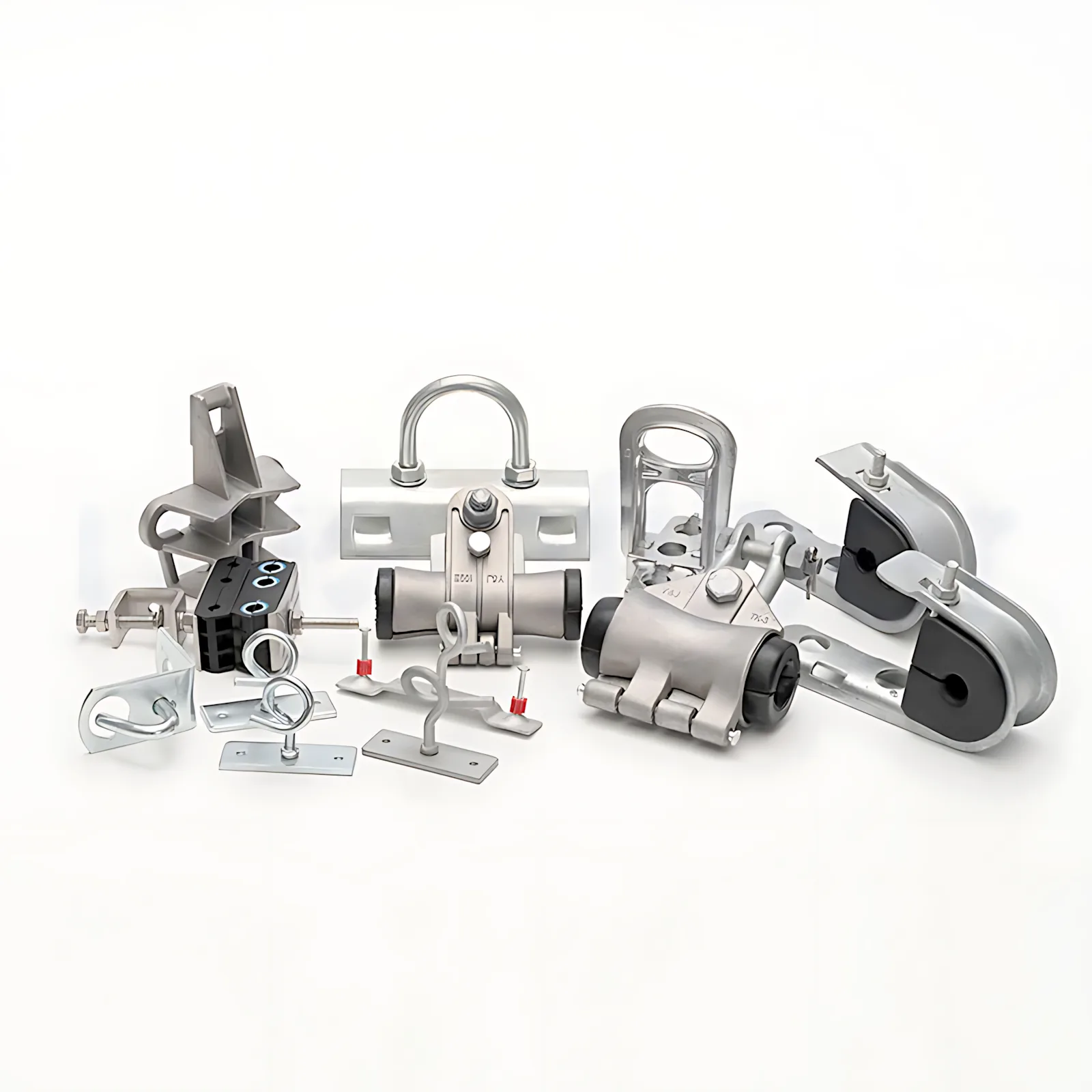
A: The hardware families are largely separate. ADSS uses suspension clamps and tensile clamps with preformed rods designed for polymer-jacketed cable. OPGW uses metallic suspension and dead-end clamps rated for the cable’s short-circuit current capacity. Both are available as complete hardware packages from ZTO Cable.

Similar Posts